
Today, we’re joined by our guest contributor, wooooo! This is the sixth in a multi-part series on draft for SWU. We’re excited to watch him break down every card in the game for its utility in draft. Check out his initial guidelines for these ratings in the intro article here. Take it away wooooo!

Heroism common and uncommon card review:
Alliance X-Wing [c]: (C-)

Nothing exciting but still playable.
Fleet Lieutenant [c]: (B+)

This guy is absurdly powerful. His stats are barely below curve and his effect is tremendous, allowing you to push damage, create trade ups, and also keep action economy.
General Dodonna [u]: (B)

Another very powerful neutral heroism card, this guy curves really well with some of the better rebel units. If not immediately answered, he can snowball your board to a win pretty easily.
Medal Ceremony [c]: (D+)

Pretty decent if you can get two triggers off of it, can make combat math for your opponent pretty annoying. Not a card I generally want multiple copies of though.
Rebel Pathfinder [c]: (C-)

Another 2/3 filler for the rebels. You need a critical mass of turn one plays in draft, and this does that job decently.
Regional Sympathizers [c]: (F)

The stats on this are way too low to consider running it.
Snowspeeder [c]: (C+)
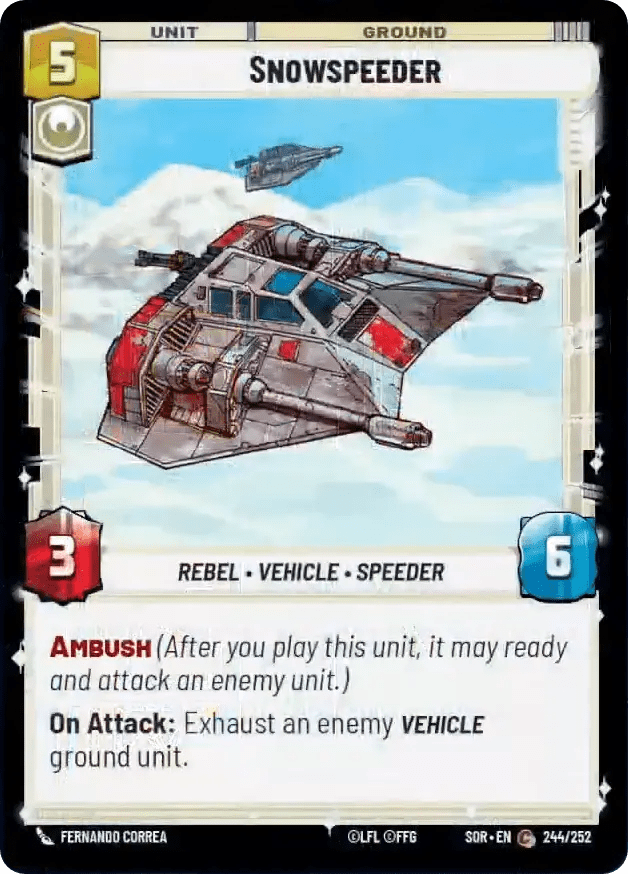
Ambush is great, the only hold up from reaching the B range is that on turn four, a three-power ambush won’t always kill the things that need killing.
Wing Leader [u]: (B-)

Mostly, I think this card is good (as the grade suggests). I also think it’s overrated at the same time (confusing). This is essentially an Academy Training upgrade stapled to a poor body. Most heroism decks will have enough rebel targets for this, and I’d include it in any hero deck. There’s not too much in limited that punishes early Wing Leaders the way it can get punished in constructed.
Villainy common and uncommon card review:
AT-ST [c]: (B-)

I’m not usually a fan of big clunkers that don’t do anything when they enter, but this guy is REALLY big. This is one of my favorite top ends for villains. The stats are tremendous at the cost.
Cell Block Guard [c]: (C-)
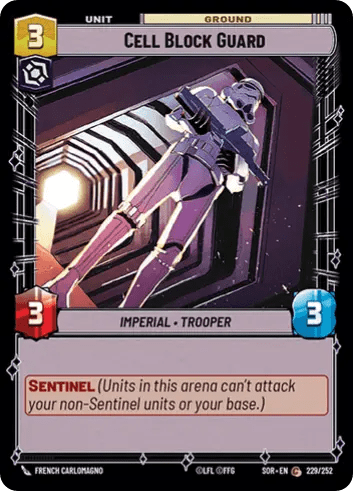
3/3 for three is a bit weak, and not a great stat line for a sentinel.
General Veers [u]: (B-)

Only a bit worse than Dodonna because of where he fits in the curve and his body being a bit easier to deal with. But the same things apply. If he sticks around, he can snowball.
Maximum Firepower [c]: (C+)

A clunky removal event with huge upside, this can be a fantastic leader sniper if you have enough imperial units in your deck.
Snowtrooper Lieutenant [c]: (C+)

Unfortunately for villains, this is not fleet lieutenant levels of power. The body left over is much worse, and it doesn’t curve out as well as his rebel counterpart. It’s still very good though.
TIE Advanced [u]: (B)

Hey, one of the villain/hero mirror cards that’s better than the rebel version (in draft that is). The body left over from TIE Advanced is actually way more relevant than Wing Leader’s because lots of space units have three health. Additionally, lots of villain leaders have big health pools, which are fantastic targets for this buff.
TIE/LN Fighter [c]: (D+)
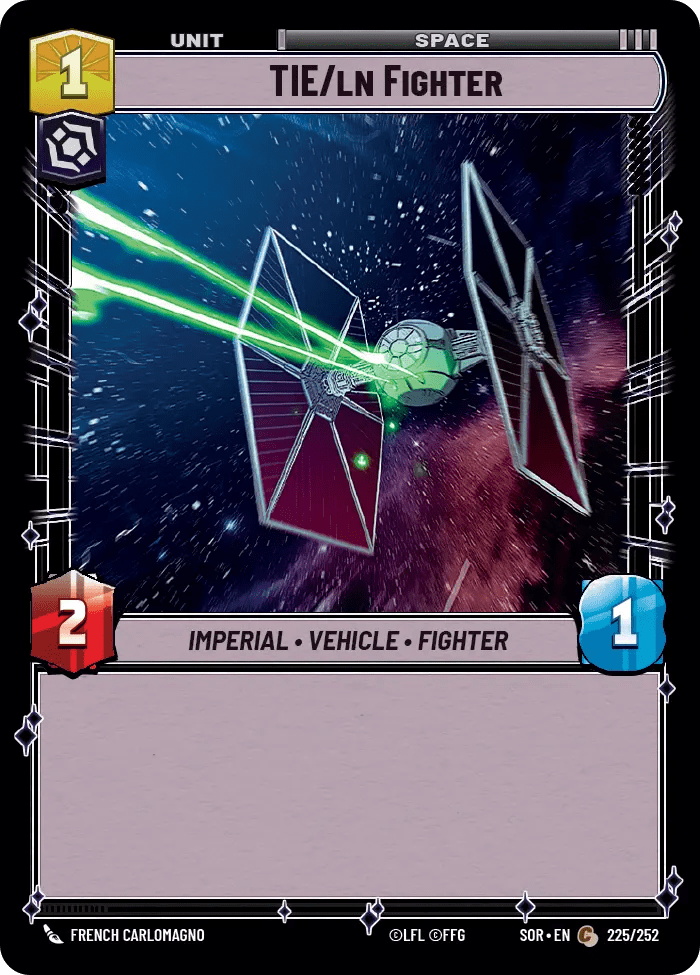
In general, I don’t like this card. Too low impact to be worth a card slot in a deck. However, if I’m drafting for Tarkin, boy does this fly up the charts in value. A turn one 3/2 space unit that will scale up if not immediately answered is really oppressive sometimes.
Viper Probe Droid [c]: (C+)

3/2 for two. Good.
Neutral common and uncommon card review:
Confiscate [c]: (D-)

Slightly better out of the sideboard if you have good targets for it.
Corellian Freighter [c]: (D)

Only upside here is that it’s not color restricted, but otherwise the rate isn’t great.
Frontier AT-RT [c]: (B-)

I actually really like this guy, and if you can enable the ambush on turn three, it’s very strong. It’s actually not completely depressing to play without the ambush either. It’s similar to Escort Skiff, requiring some deck building consideration, but when it hits, it’s fantastic.
Restock [c]: (F)

Why?
Underworld Thug [c]: (D+)
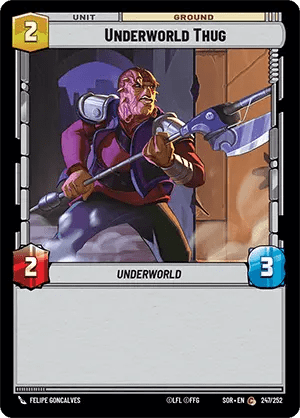
The last two drop you will need to consider, but it still does the job if you end up needing to dig this deep.
Volunteer Solider [c]: (D-)
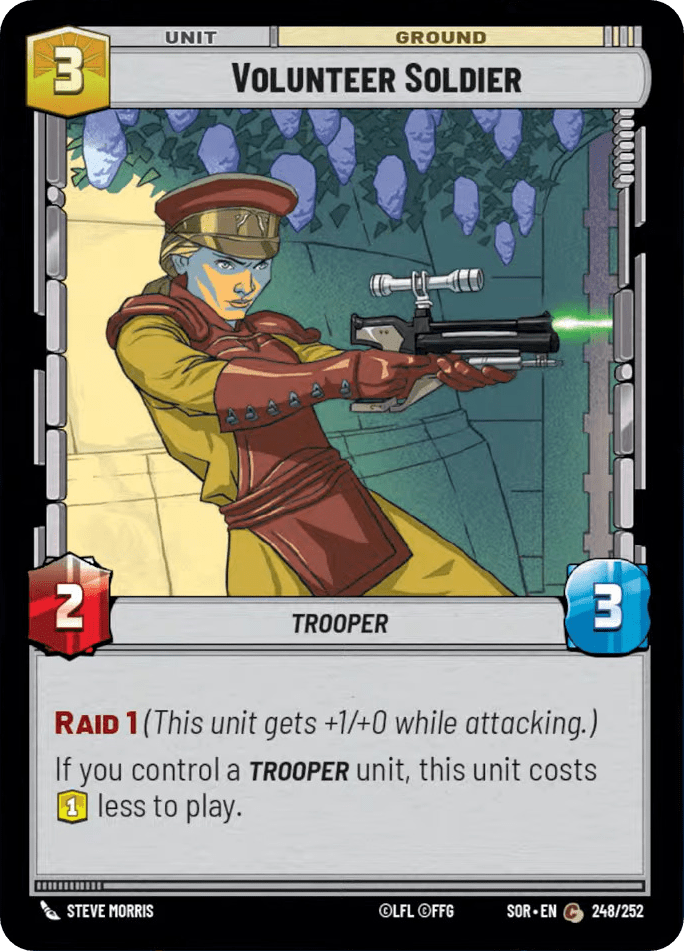
This card is incredibly strange, because it’s a two drop that can’t be played on the first turn. You’re not even really getting a payoff for enabling it, since 2/3 with raid 1 is still basically just a regular power level for a two drop.
Closing
Heroism tends to slant more aggressive in this set, and the neutral pool is highlighted by Fleet Lieutenant, which is one of the best (if not best) commons in the entire draft pool. Villains are bit more reactive, and have one of the best “big” generic bodies in the pool in AT-ST. Both of the single-alignment pools have some very powerful cards and are extremely flexible. Early in a draft, if you notice that you are trending more towards a hero or villain leader, the cards in that alignment become extremely valuable as they leave you open to finding your supplementary color as you fill up your deck with playable cards.
The Neutral cards on the other hand are complete filler other than the ambushing AT-RT. Since the AT-RT can go in to literally any deck, it’s grade was bumped up.
Previous Articles in the Series




 Garbage Rollers
Leave a reply to wooooo’s Guide to SWU Draft (Part 1: Intro + Leaders & Bases) – Garbage Rollers Cancel reply