

When SWU launched, I wrote an article on SWU’s cost curve and how units from that set fit into it. Now that Shadows of the Galaxy is upon us, it’s time to expand that series with an examination of Set 2’s cards and mechanics. Let’s have a look at the new mechanics and cost trends hitting us this week.
As a reminder, the basic formula of the game goes like this:
A basic, 1-cost unit has four stat points. From there:
1 resource = +2 stat points = 2 direct damage = drawing 1 card = 1 shield = 3 healing
New Mechanics: Smuggle, Capture and Bounty
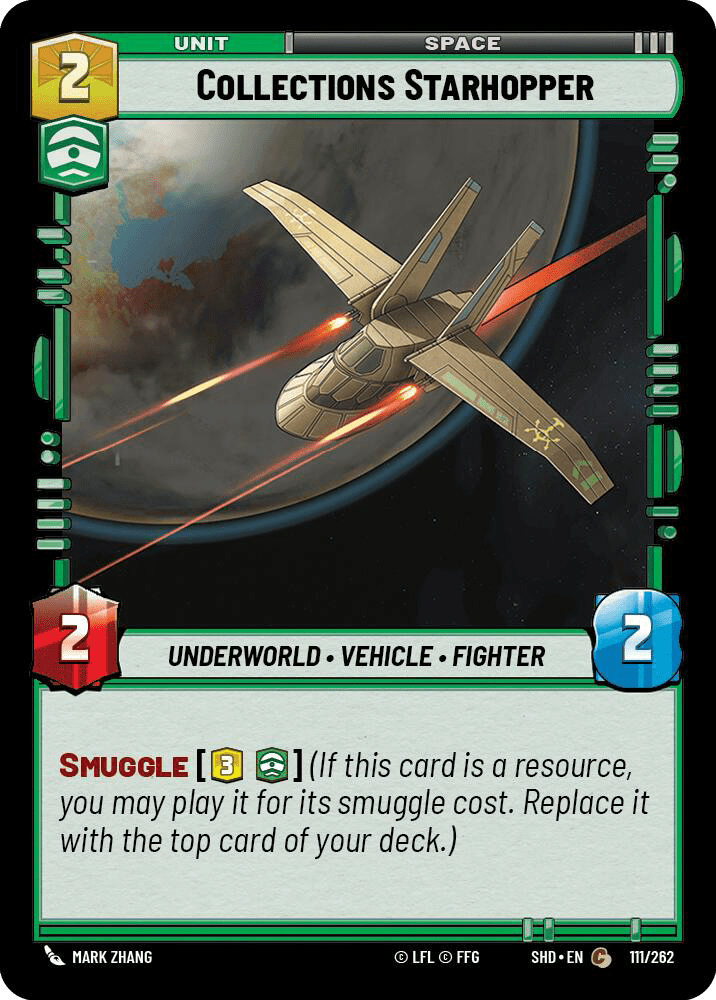
Smuggle – Smuggle allows us to play cards from our resource row for an additional cost. When evaluating the cost of these effects, we can start by thinking of it as a pseudo-card draw. We’re getting a card into play that we didn’t have to pull from our hand. By that logic, Smuggle effects should cost 1 more than the printed cost of the card. However, they often cost 2 more. The way we can process these disparities is by viewing the difference as a design choice. Cards with Smuggle costs 1 more than (or even with) their regular cost are the kinds of “Smuggle-first” plays you want to make with Lando or Hondo. Cards that cost two more are intended for play from hand and the Smuggle cost is just an added bonus, giving you slightly more flexibility. It’s hard to quantify that flexibility in terms of cost, but it’s likely something around a quarter cost point or half a stat point.

Capture – To understand capture in terms of cost, we need to break down the subcomponent actions of capture and rescue.
When a unit is captured it:
1. Loses all its upgrades and damage;
2. Goes under the capturing unit;
3. When it is rescued, it comes back into play exhausted.
So, a capture can be thought of first as a counter for upgrades. If you can snag a shield or experience at capture, that’s a cost point worth of value. Second, it’s an exhaust effect- at the very worst, the captured unit won’t be ready this turn. Third, there’s the upside of if your opponent doesn’t liberate the unit. Every turn the unit remains captured is essentially an exhaust. Given this symphony of effects, we can expect a basic capture effect to cost 3.
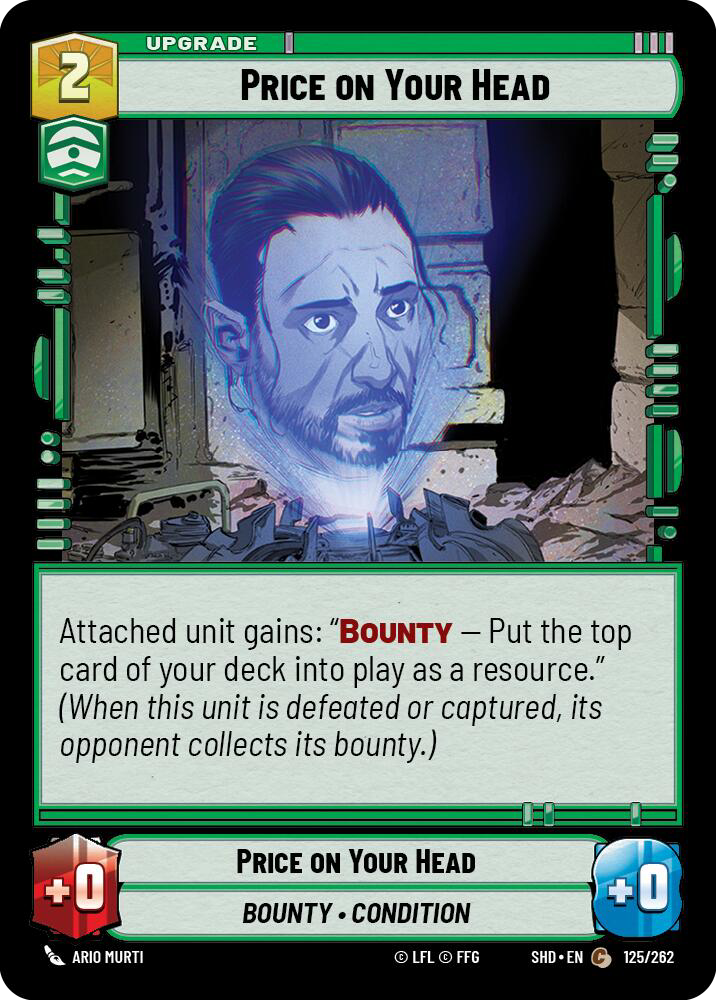
Bounty – Bounty effects are the most straightforward in terms of cost. Whatever effect the bounty has, you can expect it to cost 1 less when applied via a bounty upgrade. You can see this difference in Daring Raid vs. Guild Target or Price on Your Head vs. Resupply. This cost difference is to compensate players for the risk that the bounty effect might never actually go off.
The 3/3/5 Bump

In addition to new mechanics, FFG also threw us a curveball at the 3-cost point. In set 1, the only unit to have a 3/5 statline for three cost was Boba Fett, who was widely considered one of the most over-curve units. With the advent of Liberated Slaves, DJ and Cassian Andor, this is no longer an anomaly. From here on out, we’ll be looking for 8 stat points in our 3-cost units!
The Best and the Worst
Now that we understand the new dynamics of Set 2, let’s take a look at what cards might be over or under the cost curve for this set!
Undercosted: The Client

These stats would be decent on a three-cost unit, if only slightly low. BUT WAIT. He also has shielded and a killer ability. With The Client, you’re essentially getting two extra stats points above curve and an amazing healing ability. He even has useful traits to boot!
Overcosted: Vigilant Pursuit Craft

With sentinels, we’re typically looking at one less stat point than would normally be had at their cost. So, for a 5-cost sentinel, I’d be looking for 10 stat points. This one only has 8… “But, the Smuggle ability!” you might say. Unfortunately, that’s costed two above its already inflated regular price, making this basically unplayable outside of the grindiest limited games.
Undercosted: Cobb Vanth

Cobb has the straightforward stats of a 2-drop unit. BUT, when he’s defeated, he can grab us one of the numerous 2-drop units in our deck. It’s like we’re paying 3 cost for 4 value. Pretty simple positive math!
Overcosted: Enforced Loyalty

The designers of SWU seem intent on overcosting card draw and making underpowered double Command cards in the process. There’s a ton of cards now that point to the baseline cost of card draw being 1. If this was “pay 2, draw 2” we might be in business. But the fact that the additional requirements to kill one of your own units AND be in double Green are on the card make this utterly unplayable.
Undercosted: Relentless Pursuit

If the baseline cost of capturing a unit is 3, and this card does that PLUS gives us a shield, then we’re talking serious value. Not to mention, the shield makes it much harder to retrieve the captured unit, raising the likelihood of further value from the capture. Bounty Hunters rejoice!
Overcosted: Ruthless Assassin
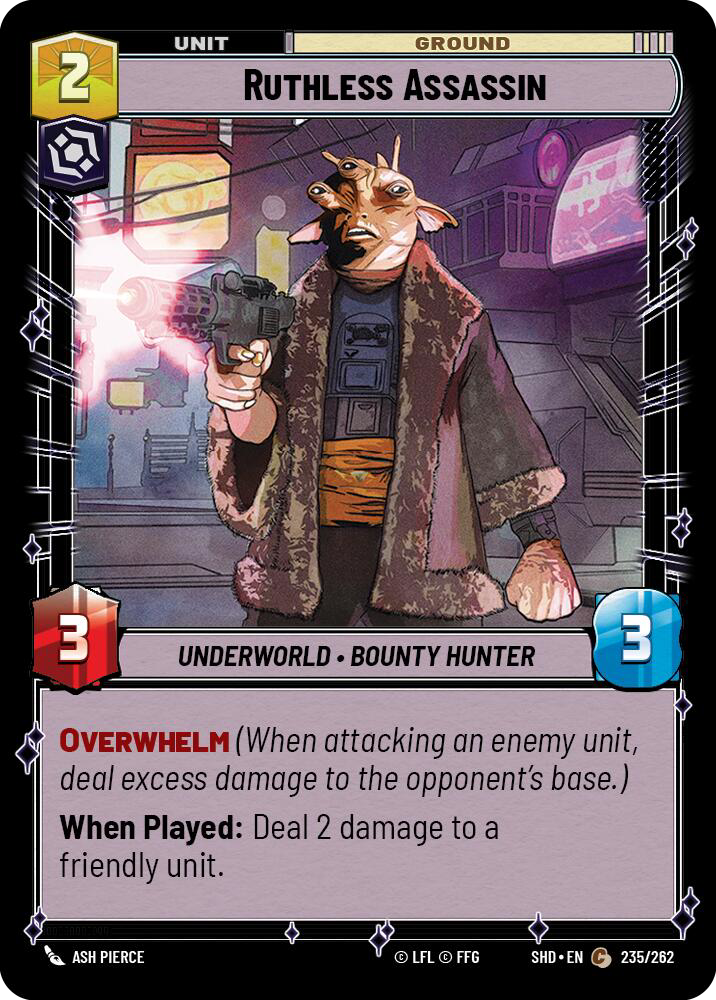
Doing two damage to a friendly unit means this 3-eyed chump is only delivering 4 stats at 3 cost. Since Overwhelm isn’t a keyword that justifies that kind of under-statting, this guy is gonna remain in everyone’s binders indefinitely.
~~~~~~~~~~~
Thanks for reading today! Come back Friday when we debut our Set 2 Meta Snapshot!





 Garbage Rollers
Leave a reply to buzzard0190 Cancel reply