

We were fortunate to bump into Game Designer John Leo this weekend at the Dallas Planetary Qualifier hosted at Common Ground Games! He was kind enough to answer our questions, at least to the extent secrecy would allow him!
~~~~~~~~~~~~~~~~~~~~~~~~~~~~~~~~~~~~~~~~~~~~~~~
Hey, Garbage Rollers. I just got home from a visit to Dallas, which included a day at the Set 3 PQ! Big congratulations to Tyler for taking down the tournament. There were some amazing players in the mix, and some very cool decks. Well done!
Hello John, thanks for chatting with us! Can you tell the fans at home a little about yourself? What is John Leo passionate about besides designing Star Wars Unlimited, mustaches, and poetry?
You’ve nailed a couple already, but I’m passionate about a lot of stuff! Film is a big one. I run a small film club here in the Twin Cities with my friend Daisy. I watched 148 films in 2024. I also have a couple of cats, big surprise.
Can you give us a little bit of your designer background?
I got my start working on RPG accessories for a small company in Indiana. I did copywriting for their e-commerce listings, then moved into helping them actually develop the products. It was a lot of fun and we made some useful, interesting tools that are still popular. From there, we shipped my first game, a fun little social deduction game called Wolves of Mercia.
I bounced on to another studio where I did development on mystery game “experiences,” and eventually applied to FFG. I didn’t get the job on my first application, but learned a lot from the process. I applied again the following year and became a part of the Star Wars: Unlimited team!
What card games, FFG or Non-FFG, have you played in the past?
I came up on the scene of FFG’s cooperative Living Card Games. I was (and still am) a member of community for the Lord of the Rings: The Card Game. I’m also big on Arkham Horror: The Card Game; I’ve played all the released content with my wife!
On the competitive side, I played Magic: The Gathering for many years, and still keep up with my cube! I was also into the A Game of Thrones LCG (both 1st and 2nd editions), among others.
Of the three popular card game player archetypes, which do you most identify with (Timmy, Johnny, Spike)? How does the Star Wars Unlimited design team balance designing cards to cater to all player archetypes?
You may have heard of this, but there are a couple of other archetypes that don’t fall into the big 3. I actually identify most as a “Melvin,” which is the person who gets excited by game mechanics, and likes to analyze how they’re implemented. I get jazzed when a card comes together in a clean, elegant way.
The team is a great mix of different player personalities. Danny Schaefer is a brilliant competitive mind. Tyler Parrott gets excited about theme and knows how to bake it into a card with a well-chosen title or subtitle. As a team, the devs care about making cards that feel powerful, interesting, and evocative, but those definitions are moving targets and mean different things to different people. This game system is great in terms of creating emergent moments, so if we stick to our design principles and design cards with intentionality, it’s all going to come together.
What excites you most about Star Wars Unlimited? Is this the same answer you would have given a year ago?
I love this game. It’s the first TCG to really capture my imagination from a design perspective, and that’s all credit to Danny’s vision. When I first started, I was just excited to be playing in the Star Wars galaxy. Now we have firm footing, clear eyes, and it’s just a joy to get up and go to work on this game.
What was designing the Twin Suns format like? Any fun stories from the design process?
It was a blast! When I was hired along with MJ, Ryan Serrano, and Joe, while we got our feet wet, one of our first assignments was to get together and figure out the multiplayer format. We had a couple of guidelines, but mostly it was wide open. We had constant playtests for weeks, and it was a great way to learn the cardpool (sets 1-3 were either finished or deep in the development process). It was also a great way to build camaraderie. I think that was how Joe got his Hyperspace Joe nickname, he only playtested with Hyperspace cards.
One of my favorite stories from that time, we knew we wanted to incorporate multiple initative counters. For a long time, the “Blast” counter (it wasn’t called Blast back then), healed your base by 1 instead of damaging others. During playtesting, we realized our games were going just a little too long. We realized of course, if you remove the heal and instead damage each enemy base, you’re keeping the effect the same in terms of relative player HP, but in a way that accelerates the game instead of slowing it down. That felt like a big moment.
How did the team land on 80 cards (starting soon) for Twin Suns decks? Will 80 card twin suns games feel much different from the 50 card decks we’ve been playing with sets 1-3?
We always knew the 50 card decksize was a placeholder. We experimented with varying sizes for the final number, and 80 just felt more correct than, say, 100. In some other TCGs, 100 cards make sense because you may have a specific index of resources you need to draw. Not so in Star Wars: Unlimited. 60 felt really close to the 50 of our constructed format, and 90 felt arbitrarily close to 100. 80 felt great.
Games are going to feel a bit different, in the sense that larger decks will inherently lend themselves to more variance. I do expect the Plan counter to increase in value, relative to the others. When you have 80 cards in your deck, that card selection tends to matter more. So you may see players jockey for it or take it more frequently, where in some metas it has been seen as less desirable.
We’re finally approaching the sets you had a lot more involvement on, what’s it like watching your work be revealed to the community? Have you enjoyed their reaction to cards you’ve designed?
It’s amazing, of course! Shipping a game feels a bit like parenting, I’d imagine. You do your best, you work hard, and then one day it goes out into the world to be evaluated, judged, and to succeed or fail. There’s anxiety in that, but also an enormous capacity for pride.
What is your favorite card that you have designed? (If not revealed, can we get the Set # Card # for later reference?)
My favorite cards are all in Set 7, because I designed much of the set from the ground up. However, I was a co-lead on Set 5: Legends of the Force. Card #79. It’s a Vigilance card, obviously.
What card have players loved that most surprised you? What card that they weren’t fans of?
I’ve been pleasantly surprised at the reception to Admiral Piett: Commanding the Armada. I loved that leader all through playtesting and have been thrilled to see the excitement surrounding the card for constructed play.
On the flipside, I’m curious about the way the player base responded to Admiral Ackbar: It’s a Trap! When it comes to iconic characters, folks often develop preconceptions about how a card should look, what game mechanics should be implemented to capture the feel. Sometimes those expectations can create a barrier that prevents you from enjoying the thing. This doesn’t just come down to card evaluations, but just life in general. Our expectations are often the greatest threat to our enjoyment.
What does an average week of working on Star Wars Unlimited look like for you?
In general: Mornings are for meetings and design work, and afternoons/evenings are for playtesting.
Morning meetings often look like a) the 2 set leads ideating on cards and talking about their set, or b) a group discussion in which we share status updates and talk through problems as a team.
For playtesting, it depends on which sets are in active development; every project goes through multiple phases, and its needs will vary greatly. But in general, we have playtest 3-4 days of the week. This looks like mechanical playtesting of sets in early development, or more design-related sessions, or balance-testing “jams.”
When doing internal playtesting, how do you strike the balance of testing draft/sealed vs. testing purely from a competitive standpoint?
We test for both! And I think there’s not a dichotomy between competitive play and limited play. Some of the best, most competition-minded players I know are drafters.
That said, it’s important to bake in time for both constructed and limited play. When it comes to draft and sealed, your commons are huge, load-bearing cards, and each design counts for a ton. Of course, most commons aren’t going to be huge roleplayers in constructed, but many of them are (and should be). So it comes down to making sure each card serves at least one purpose, and that we approach those designs with intention.
We’re here today at a Set 3 PQ and, so far, there has not been a single PQ-winning deck that leverages the star mechanics of Set 3 – tokens, Coordinate or Exploit. Why do you think that’s been the case?
I think there are a few reasons! This PQ season has shown a massive variety of deck archetypes and card choices. For instance, we’ve very recently seen the emergence of Plo Koon: Koh-To-Yah! as an efficient Ambusher who really wants that Coordinate condition to be live. I think we’ll continue to see different cards rise and fall. No card exists without context, especially not cards with Coordinate and Exploit, which care even more about the other cards in your deck. However, with Jump to Lightspeed introducing a load of new “When Defeated” abilities (not to mention Grand Admiral Thrawn: …How Unfortunate), it’s going to be even more appealing to use those units as Exploit fodder. This is just a small example, but I think it’s illustrative of the larger point that these cards are extremely dependent on context, and we expect that context to change over time.
Of all the mechanics of SWU, it feels like drawing cards has been the hardest to nail down the designer’s costing formula. How do you approach card draw from a costing standpoint?
In a game like Star Wars: Unlimited, there is a little less variance than some other card games. We don’t have any resource-specific cards, for one factor. On the other hand, we draw 2 each regroup phase, so we’re going to see twice as many cards as in a “draw 1” system. I think card draw has been approached with caution in the first few sets. Over time, we’ve reevaluated the value of card advantage. It’s a moving target that’s going to depend largely on the environment it’s in, though.
We were extremely pleased with how FFG approached Boba Fett, Collecting the Bounty and his eventual suspension. It’s clear that process took some time, gathering data and testing. Were you satisfied with how the team approached balancing? Is a similar process underway for any other cards? (you don’t have to tell us which)
I am so pleased with the way the team approached the Boba Fett suspension. We gathered data, we jammed an incredible number of games, gathered more data, and approached the problem from many, many angles. We considered SO many solutions, and I’m terrifically proud of the way the team, and Danny in particular, handled it.
As always, we are keeping an eye on the meta, and on interactions which might feel unfair to players.
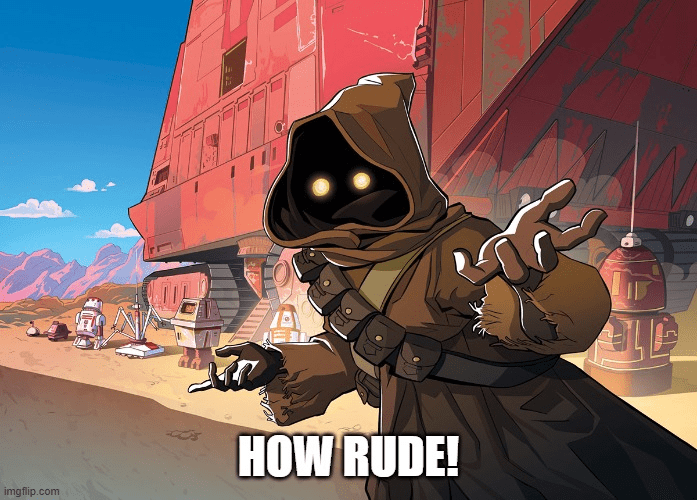
When are we finally getting a Jawa leader? How can you continue to withhold this from us!?
Every time you ask, I delay the Jawa leader by six months.
Have you considered doing reprints with different art in the future?
We have considered it! Nothing is off the table.
Are we going to see new art treatments for prize cards now that Carbonite packs and Judge promos have started using different templates?
Based on the promo cards we’ve revealed for Sectors and Regionals, I would say that’s confirmed!


Can we expect to see a couple of new keywords each set or will you stop introducing new ones at a certain point?
I think we’ll continue to develop new mechanics with almost every set. There will be a time for “going back to the well,” but there is a lot of ground we want to cover in the first two years of the game. That said, they may not always be keywords 😊
At the SWU Launch Celebration nearly a year ago, we asked you why “pilot” was a conspicuously absent trait in Set 1. Clearly that was Jump to Lightspeed! What are you excited about in the set?
Jump to Lightspeed is a great set. Not only bringing the epic space battles and dogfights to the forefront, but also highlighting some great characters and vehicles. I personally love this set as a draft format.
What would you say to players who remember the Tarkin issue in SWLCG to calm their fears about upgrade removal being used against Set 4 leaders?
There will be a lot of conversation going forward about Piloting on leader cards. I think this is a multi-pronged conversation, but here’s what I’ll say:
We’ve already seen cards like Chewbacca: Faithful First Mate, with defensive text baked in. He’s not the only Pilot card with a protective ability, I can promise you that. So for the cautious players, there is something.
There are also some leaders who will make you rethink Piloting. I’m excited to see the community response to a leader or two who have yet to be revealed, and who handle the mechanic in a different way.
Pilot leaders also tend to have quite good stats on the upgrade side, so we’re talking about a very high ceiling. I think there’s a very real value in “making them have it,” in that pressuring an opponent while they hold up removal can often put them on the back foot in other ways.
Ultimately, Piloting is a hugely contextual ability. It’s going to be interesting to see how it shapes the meta and how the removal suite does or does not rise to the occasion. Mostly, I’m excited to see all the great decks players are able to build and compete with!
What do you personally find most enjoyable about Star Wars Unlimited?
The single-action system, coupled with initiative, is what takes this game to the next level. That, and of course the incredible characters and moments that populate the Star Wars galaxy.
What is your favorite card art thus far in Star Wars Unlimited? (Set #, Card # if unreleased)
For most of development, it has been the Showcase Maul from Twilight of the Republic, but there are so many beautiful cards yet to be released, from Jump to Lightspeed, Legends of the Force, and onward.
If you had to place each SWU Designer within an as aspect combination based on vibes, what would they be? (double cunning, hero/aggression, etc)
Danny Schaefer: Command. Danny’s our fearless leader.
Tyler Parrott: Aggression. Tyler likes to “just go for it.”
MJ Cutts: Vigilance. MJ is thoughtful and systematic.
Joe O’Neil: Aggression. Joe talks the most trash.
Ryan Serrano: Cunning. Ryan is extremely clever.
Michael Dunsmore: Vigilance. Michael is proactive and likes to have a plan.
Elijah Montoya: Command. Elijah is great at working with a team.
Logan Gianini: Vigilance. Logan recently tidied the playtest area, which feels a lot like the Restore keyword.
Ryan Miles: Villainy. Ryan is evil.
Jorge Zhang: Villainy (also evil)
If you had to spend a week locked in a basement with only tabletop games and 1 other person involved in Star Wars Unlimited, who would it be and why?
Danny Schaefer, if only to make sure he takes a vacation.
Do you have any care tips or hacks for the other mustachioed gentlemen out there?
Style and grooming are important! They’re visual languages which help you communicate your values and attitudes. If you want to have a mustache, I would recommend thinking through your general “look,” and how your mustache complements or conflicts with that look. They say “wear your outfit, don’t let your outfit wear you,” which is part of it. I think that means going into your grooming decisions with a plan, and carrying out that plan with confidence. (Also, it’s just hair, so you can experiment and let it grow back.)
Any last thoughts you’d like to share?
This is going to be a great year for Star Wars: Unlimited.
~~~~~~~~~~~~~~~~~~~~~~~~~~~~~~~~~~~~~~~~~~~~~~~~~~~~~~~~~~~~~~~
Big thanks to John for answering all our questions and giving us a glimpse into the future of SWU! Thanks for reading!




 Garbage Rollers
Leave a reply to Star Wars Unlimited Over/Under: Episode VII – Growing Pains – Garbage Rollers Cancel reply